
Make the room matter
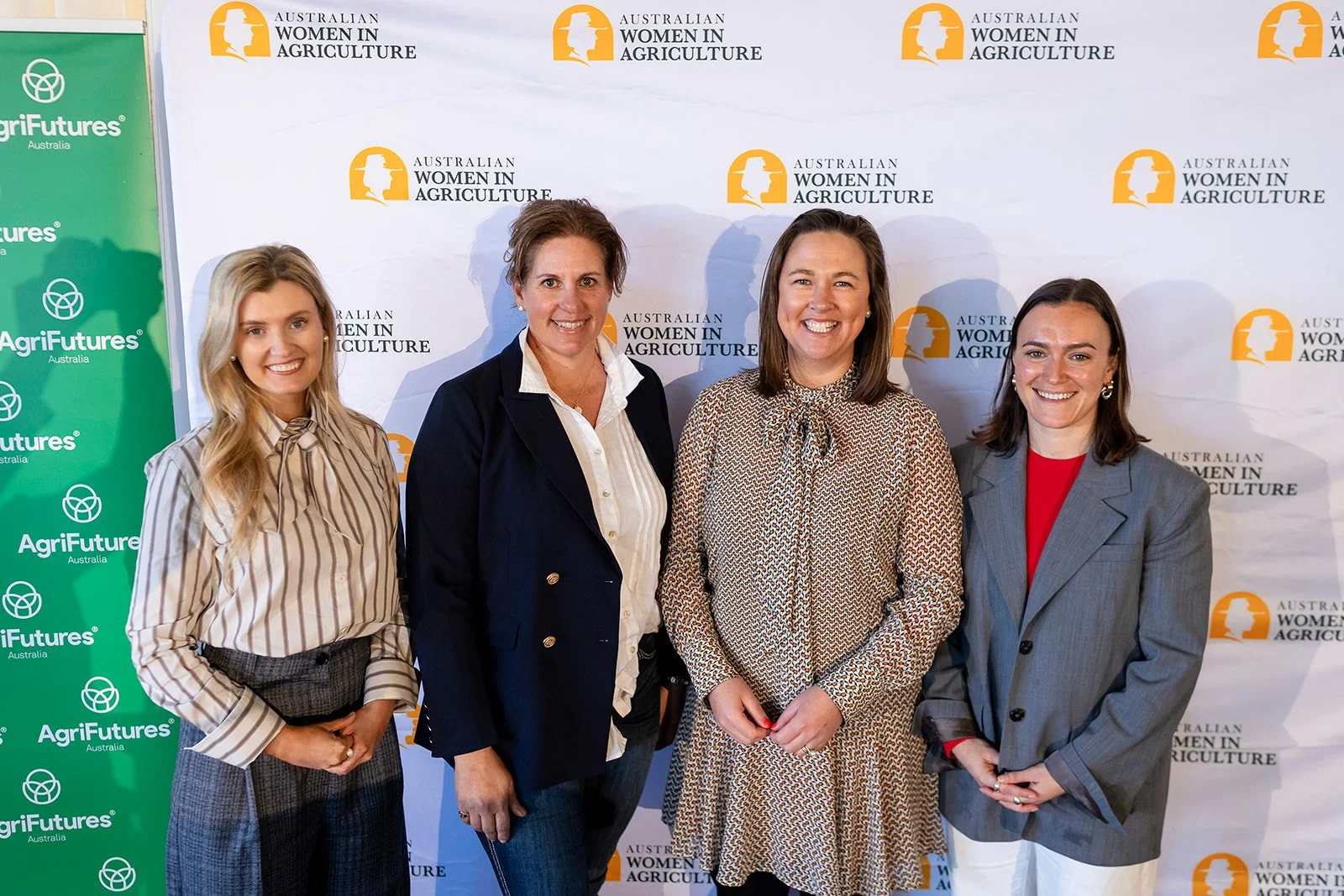
Women driving change panel session: Caitlin Herbert, Gundamain Pastoral, Mel Kiel - KLR Livestock Marketing, Madie Hamilton - AgCentric, Maggie Jarrett - SeeSaw Wines
For a year now, I have been sharing the concept of the strength of loose threads - the people beyond our immediate circles who connect us to different ideas, opportunities and perspectives. Of course, an excellent way to get a large dose of that is attending a conference!
Attending my first Australian Women in Agriculture (AWiA) Conference in July this year, another layer to the loose-thread concept became ever more apparent; ideas take on so much more power when they travel beyond our familiar circles and encounter perspectives that challenge our unconscious biases.
The event created a valuable space for women from across the sector to speak openly, build relationships and learn from one another. But it also left me thinking about that next layer of connection… how do we push our ideas beyond our inner circles and into the rooms where change needs to happen? I’m talking about the age old issues of shifting perceptions of agriculture (and its importance to our very existence) among our city cousins, challenging the barriers that continue to impact glass ceilings, and advancing genuine embrace of diversity in the workplace. Impact is going to depend on reaching people who are not already part of the conversation. So where were the men? Where were the decision makers? Did we do enough to get them into the room, or admittedly on to the stage?
Influencing beyond our circle
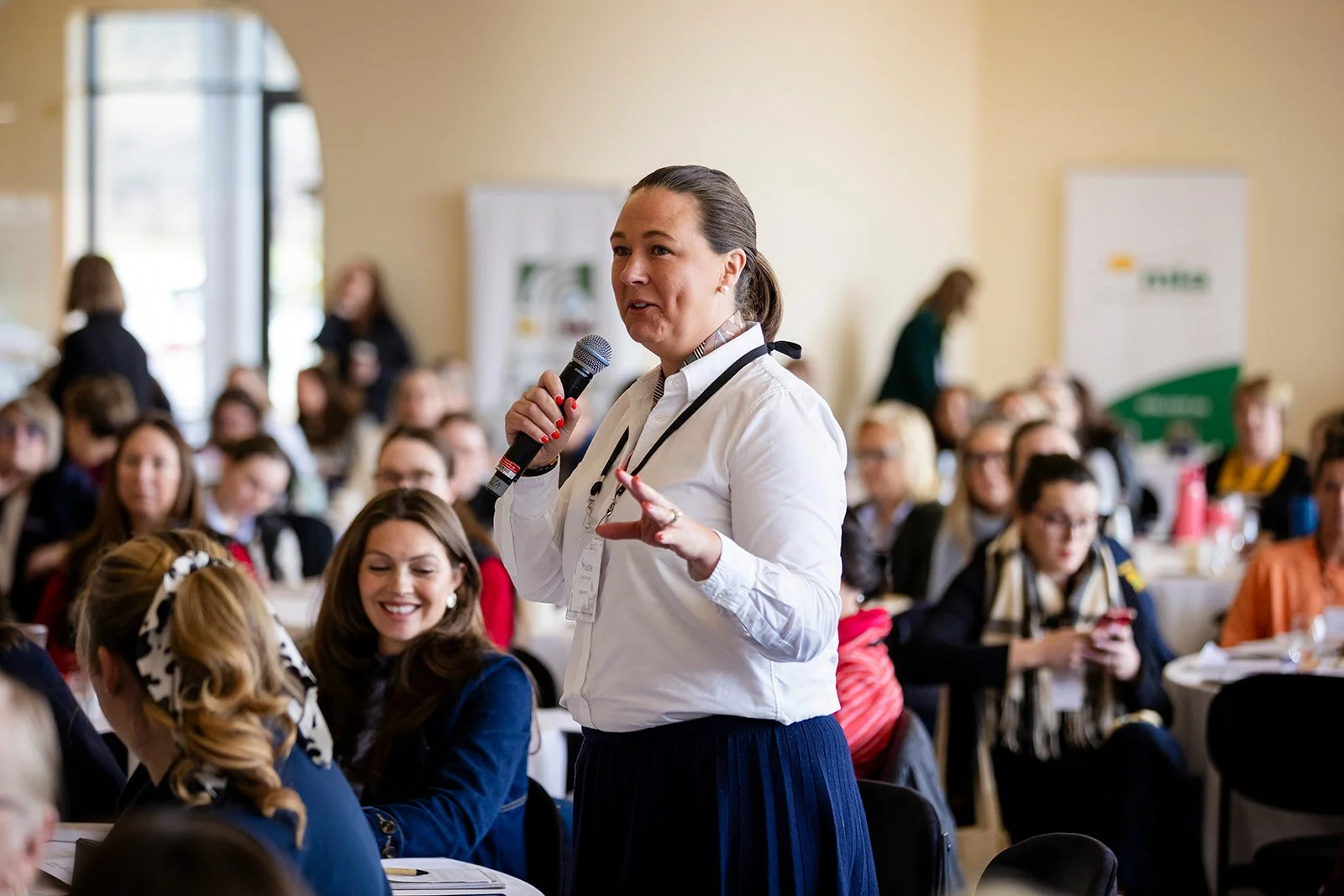
There is enormous value in bringing people together around shared experiences. These spaces create trust. They build confidence. They allow people to test their thinking among others who understand where they are coming from. It was evident by the vibe in the room that AWiA, and the women behind it, have done a sensational job in creating a strong coalition that have achieved an enormous amount on behalf of Australian women in agriculture since banding together in 1992-94.
But agreement within a room is not the same as influence beyond it.
If we want to change workplaces, improve understanding or challenge entrenched ideas, our messages must eventually move into different communities, networks and conversations. That requires more than speaking more loudly among ourselves. It requires us to build connections with people who may not share our background, experience or starting point. It also means thinking carefully about who is best placed to carry the message.
Send in a Fish
One analogy shared during the conference by Natalie Sommerville on one of the most powerful panel sessions I’ve been privy to (International Indigenous Voices - Lisa Warbrick TPOW, NZ, Raelene Ward Uni Southern QLD and Destiny Dewis Native Foodways) was:
“If you want to reach a fish, send in a fish. Don’t send in a snake.”
It is a simple but effective explanation of why the messenger matters.
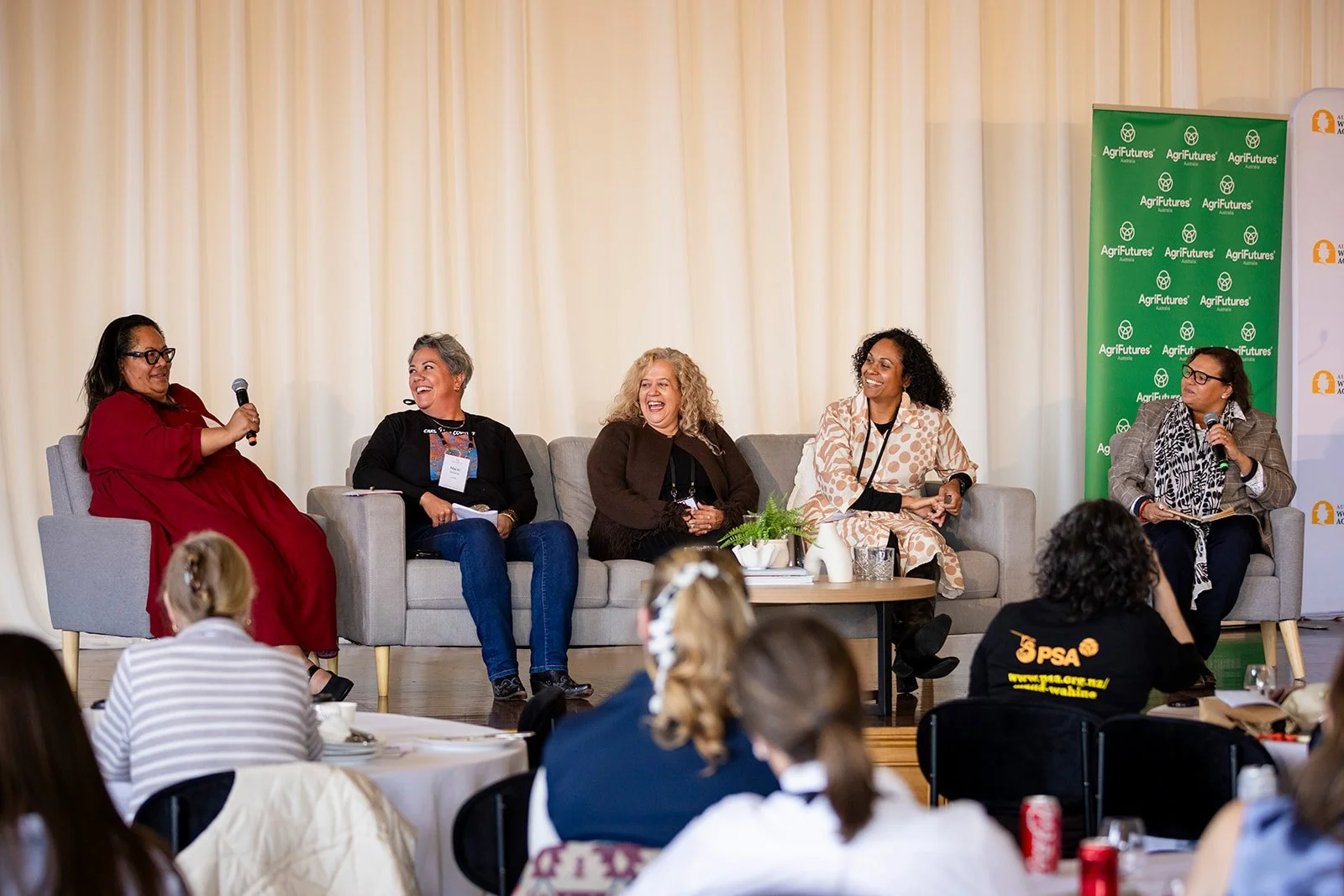
International Indigenous Voices Panel - Lisa Warbrick TPOW, NZ, Raelene Ward Uni Southern QLD and Destiny Dewis Native Foodways, was:
In agriculture, we spend considerable time considering how we can improve understanding between country and city.
Our instinct is often to send people from agriculture into metropolitan communities to explain how food and fibre are produced, why rural industries matter and what life beyond the city actually looks like and special mention warranted to the National Farmers Federation and team who do this so well on our behalf with their ‘grow you good thing’ campaign each National Farmer Day.
That work remains important.
But what if we also brought city-based people into agriculture, gave them meaningful exposure to the sector and equipped them to carry those insights back into their own networks? Campaigns that centre around this are so interesting to me, and was always a goal of mine while in the grain fed beef business, where we hosted ‘Meat the Maker’ events to expose, entertain and educate the everyday consumer to where their beef comes from. These were wildly successful, and I see others popping up now, like SteakeBabes, which makes me so excited.
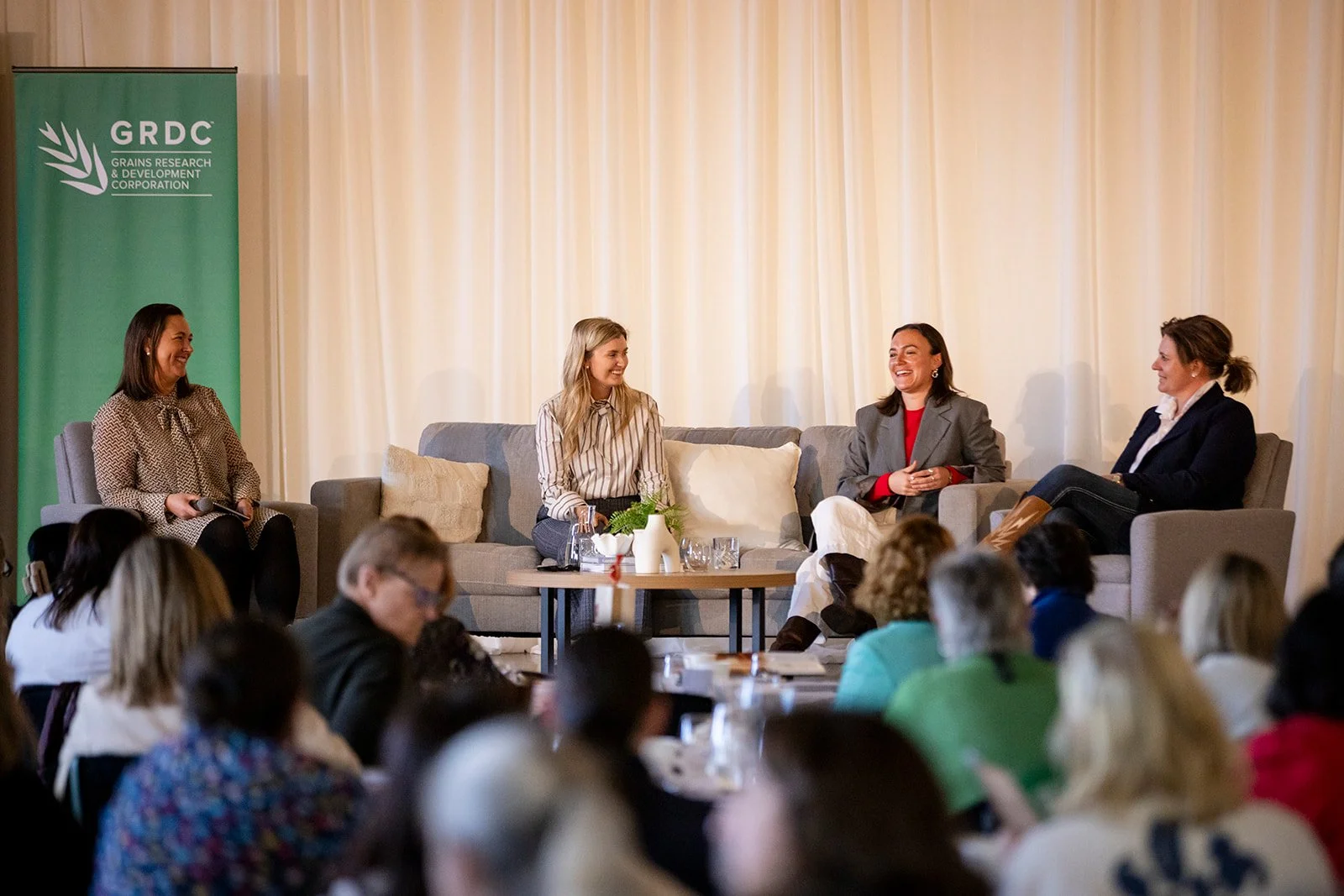
Women driving change panel session, AWiA Conference 2026, Orange NSW.
The same principle applies to conversations about women in workplaces and leadership.
Women must continue to speak directly about the issues affecting them. But men who understand those issues can also carry the conversation into rooms, networks and informal discussions that women may not be part of.
If we want more men involved in conversations about inclusive workplaces, we need to consider how we invite them in. Another great anecdote was shared at the conference by Maggie Jarret of See Saw Wines about how their workplace culture has shifted with men understanding more about women’s health and impacts. When endometriosis comes up, its not something the boss shys away from, he’s actively educated to understand and empathise. Making the workplace somewhere everyone is accepted and understood - that can only be good for business.
That is not about asking others to speak for us. It is about creating more channels through which understanding can travel.
People are often more receptive to information when it comes from someone who understands their world. That does not make the message less authentic. It can make it more effective, more powerful, and cut cut through like nothing else.
Diversity in thought
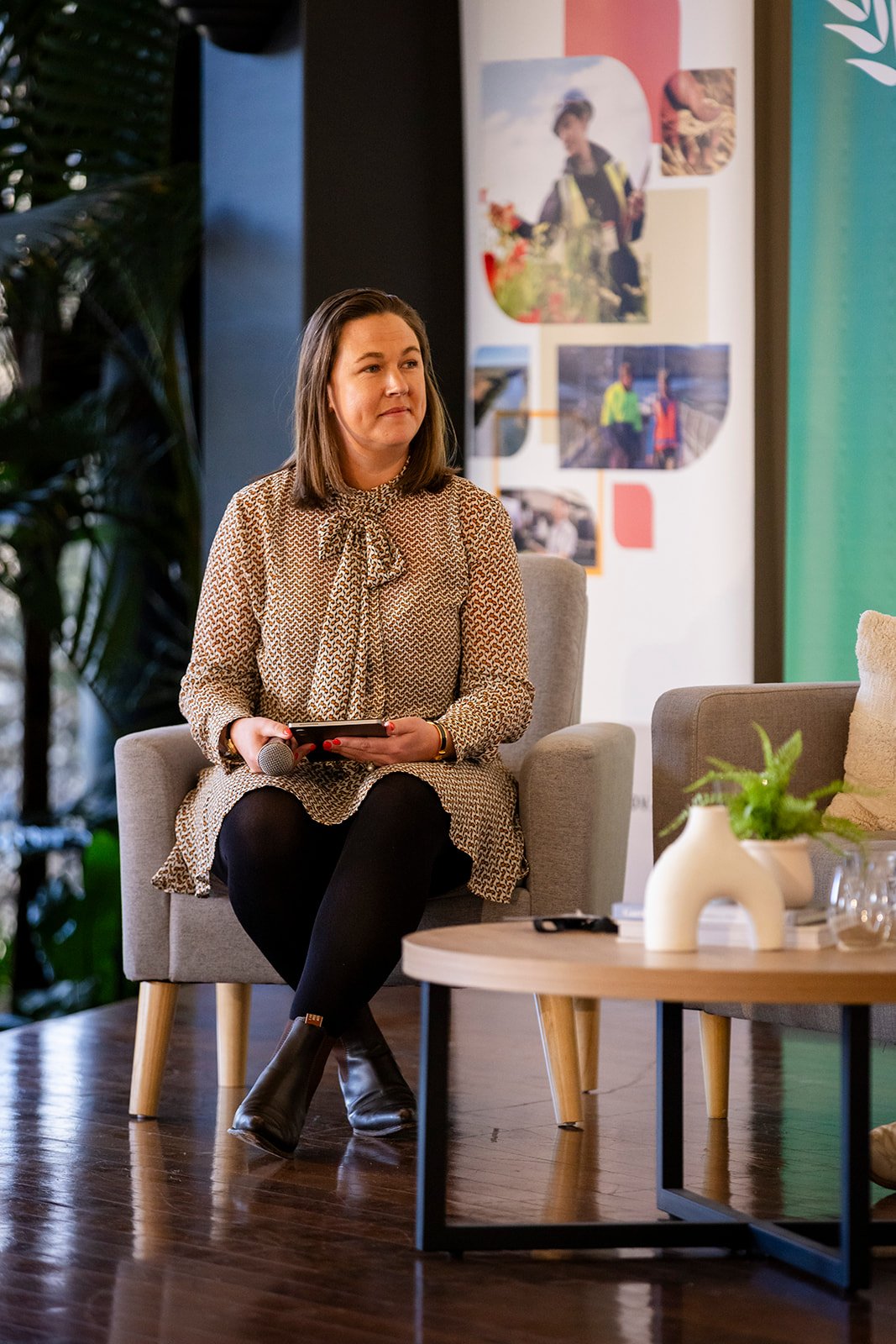
As I mentioned earlier, the conference prompted me to think about who was not there. And there were very few men in the audience, in fact there was none.
That is not a criticism of an event designed specifically to strengthen the contribution and connection of women in agriculture. Spaces like these provide a level of candour and shared understanding that is so important.
But the event’s influence becomes even stronger when the ideas generated within are carried into broader workplaces, boards, families and communities. This thought comes to mind when I recall a real question/statement that our panel session received from the floor “when I told my husband where I was off to this week, he said what will you learn there [at the conference].. that’ll just be a talk fest…”
If anyone looked around the room, they would have seen a collective of highly intelligent, exceptionally well-connected women, ready to contribute to the advancement of our sector. We certainly talked - but perhaps not in the way some might imagine a room full of women. The conversations were strategic, future-focused and charged with a determination to turn emerging opportunities into meaningful action.
Another focus of the program was women on boards. During a session on women in governance, it struck me that the challenge may not be a shortage of capable women ready to serve on boards, but a knowledge and access gap around how to identify and secure suitable opportunities. Helping to close that gap gap are the likes of AWiA and their women on boards program, and various scholarships offered by AgriFutures and other peak industry bodies to undertake AICD training. But I can’t help but wonder if it would help to shift some of the focus from preparing women for boards to building greater demand for diverse boards - through both men and women championing the organisations that have embraced different perspectives and can demonstrate the stronger outcomes that followed?
The business case is compelling. Australian research has found that increasing female representation on ASX-listed boards by at least 10 percentage points was linked to a 4.9% increase in company market value - worth approximately $78.5 million for the average business. The AICD argues that boards drawing on different experiences and ways of thinking are better equipped to navigate complexity, foster innovation and create long-term value. Its 2025 Board Diversity Index also shows that broader cultural, First Nations, disability and LGBTQ+ representation remains very limited across the ASX 300.
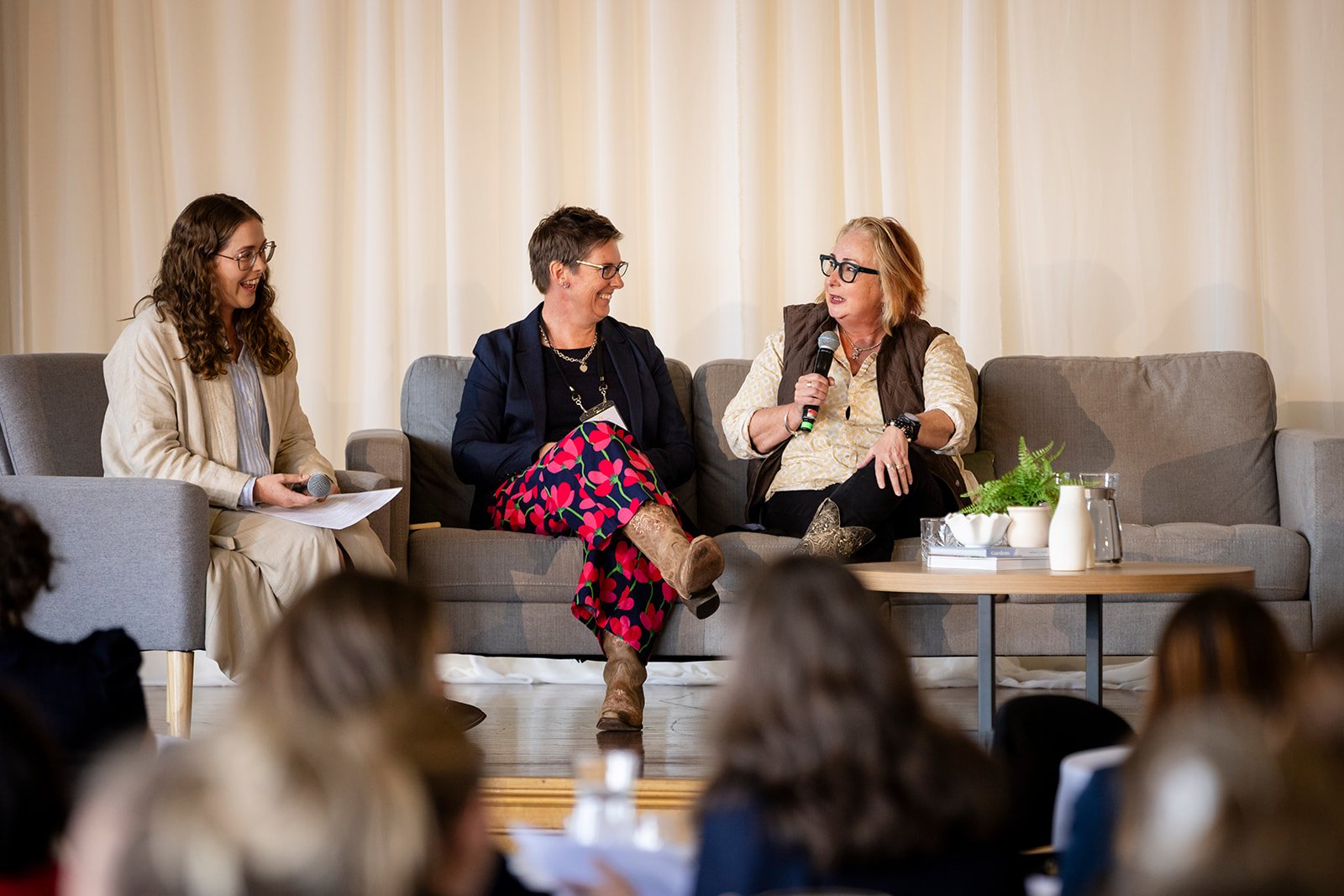
Women on boards session at AWiA conference 2026. Emily Blackburn, secretary AWiA with Pip Job and Tammy O’Malley
Make the room matter
My biggest takeaway from the conference was that connection remains one of agriculture’s greatest strengths. But connection is not simply gathering people with shared experiences in one place. It is deliberately weaving together people from different industries, communities, genders, generations and ways of thinking. It is identifying the credible messenger who can carry an idea into a network we cannot reach ourselves. And it is being prepared to listen when the perspective someone brings challenges our own.
The next time we convene a panel, design a consultation process, develop an advocacy campaign or create a leadership initiative, perhaps we should ask:
Who is missing from the room?
Who will be trusted to carry this message beyond it?
What would make the people outside the room want to engage?
The strongest loose threads are often the people at the edge of our networks. They expose us to ideas we would not otherwise encounter. They connect us with different communities. They can introduce our thinking into rooms we may never enter ourselves.
Change rarely happens because the same people repeat the same message more loudly. It happens when an idea crosses a boundary - carried by someone who is trusted on the other side.
The room matters.
But the real measure of its influence is how far those ideas travel - and whether they reach diverse groups we can bring with us towards stronger outcomes for us all.
Photos by Kirsten Cunning commissioned by Australian Women in Agriculture